
How to Spot a Fake Coach Bag
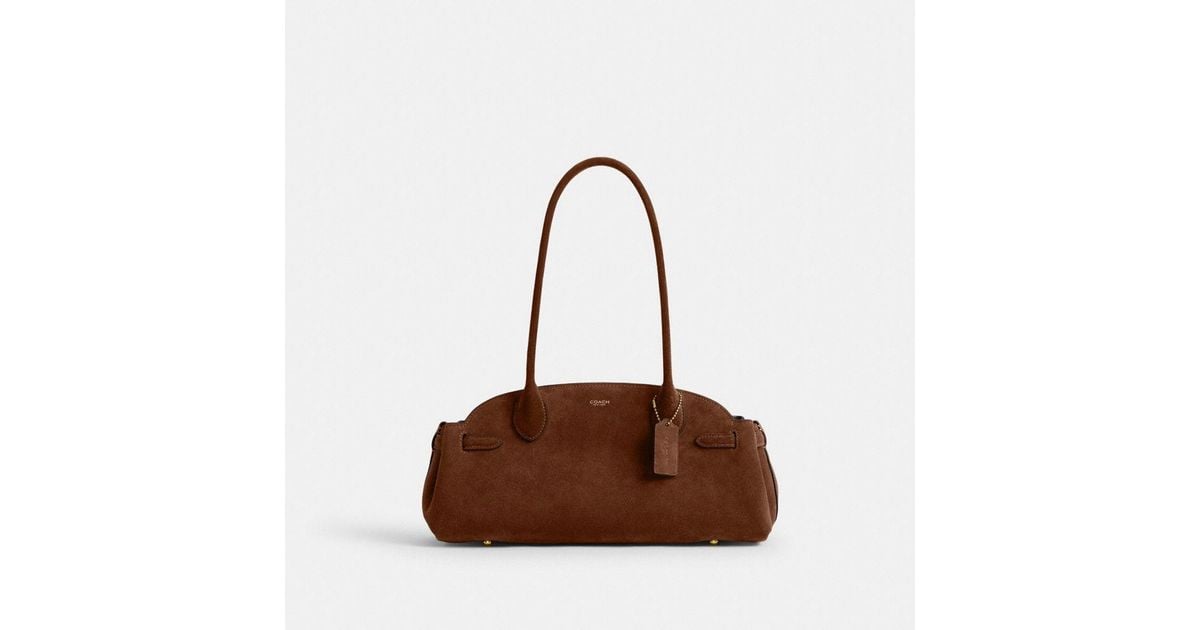
It matters to know how to authenticate a coach bag, as counterfeit coach handbags imitate the details buyers check first. Coach will not authenticate bags for shoppers and will not confirm serial numbers, and this is the most important fact to keep in mind before any checklist. No phone call or email to Coach will settle the question for you. A number of signals must be weighed together instead, led by where the bag came from. No isolated mark confirms that a bag is genuine, and one odd detail does not always prove a copy. The checklist below ranks the steps in order of usefulness, and each step is explained further down. The physical checks come from resale and authentication guides, not from anything Coach has published.
- Establish where the bag was bought.
- Read the Storypatch or creed and feel the stamping.
- Make sure the code format suits the claimed era.
- Read an F prefix as an outlet signal, not a verdict.
- Check the hardware, the stitching and the leather.
- Test the seller’s story against Coach history.
- Discount packaging and dust bags entirely.
Step 1: Start With Where the Bag Was Bought
No other clue beats where the bag was bought. As Coach puts it, authentic goods are sold through its own retail stores, Coach Outlet stores, its official website and authorised department or specialty stores. Coach Outlet is Coach’s own official channel, so Coach Outlet items are genuine Coach. A separate discount site promoted in a social media ad is not the official outlet, which on the web is a section within Coach’s own website. A coach bag sale on an unfamiliar site offering 70 to 90 percent off everything fits the reported scam pattern of copied photos, misspelt brand names and checkouts that take payment apps or crypto. While the code formats below apply to bags, the same point-of-sale rule covers coach clothing and shoes. Whenever you buy a secondhand coach bag, request a receipt or order confirmation from an official source.
Step 2: Read the Storypatch or Creed
The sewn-in leather patch is now called the Storypatch by Coach. It carries a concise statement about Coach craftsmanship and a unique registration number, and Coach says every Coach bag has one. Coach presents the patch couch outlet as a mark of authenticity, yet patches can be imitated, so a patch cannot by itself prove that a bag is real. You ought to be able to detect the text, as guides say it should be pressed or heat-embossed into the leather rather than printed on the surface. Any stitching around the patch should appear straight and even. The earlier creed, seen on older bags, first appeared in the late 1960s or early 1970s and carried no serial number. Guides also report „Made in New York City“ on the earliest pieces and „Made in United States of America“ from the 1970s to the early 1990s.
Step 3: Check the Code Against the Right Era
The formats below are drawn from resale guides rather than from Coach, and serial and style codes evolved over time. Just the codes from about 1994 to about 2006 can be decoded at all, since they follow a reported pattern of month letter, year digits and factory letter before the style number. A number shared by two bags is a red flag where the bag dates from before about 1994, because bags from that era carry numbers only, commonly hand-stamped and unique to each bag. From about 2006, the first block of the code has not been decoded publicly, so it cannot date a bag. New style-number formats from about 2020 are also covered in guides, although those descriptions fail to match every recent code. No universal decoding scheme is available, and a seller who says otherwise is stretching the evidence. Consult the table to see whether a code at least suits the era the seller claims.
| Era | Resale guide description | Can the code show the date? |
|---|---|---|
| Late 1960s to early 1970s | The earliest creeds, issued without a serial number | No serial number to decode |
| Before about 1994 | Only numbers, commonly hand-stamped | No |
| Roughly 1994 to roughly 2006 | A month letter, year digits, a factory letter, a dash and the style number | Yes, by month and year |
| Roughly 2006 and later | A letter and four digits, a dash and the style number | Not publicly decoded |
| Up to about 2020 | On made-for-outlet items, an F before the style number | Signals the outlet channel only |
| From about 2020 onward | Newer style-number formats | Guide descriptions are approximate |
Step 4: Interpret the F Prefix Correctly
Among all the code details, the F prefix stirs up the most confusion. Until about 2020, style numbers on made-for-outlet pieces started with an F, placed after the dash on the creed. Those items are genuine Coach products produced for the outlet channel. Some sellers and forums treat the F as a warning sign of a counterfeit, and that belief is wrong. The letter also stopped being a reliable signal once Coach moved to new style-number formats around 2020. A newer bag without an F is therefore not proof of a full-price boutique item. Today the most reliable way to know an item came through the coach outlet channel is a purchase from a Coach Outlet store or the outlet section of Coach’s website.
Step 5: Look Closely at Hardware, Stitching and Leather
Physical checks help, but they are clues rather than proof. Guides describe genuine turnlocks and kisslocks as solid and heavy, with clean engraving. Across the whole bag, stitches should look straight and even. The glovetanned cowhide used on vintage bags should become softer and take on a patina with use. Plasticky or peeling material on a bag sold as vintage leather is a red flag. On a Signature canvas coach shoulder bag, guides commonly cite how the „C“ pattern lines up at the seams. Check every detail against close photos of the same style from an official listing, rather than with another resale photo.
Step 6: Compare the Story With Coach History
A seller’s account should square with Coach’s own history. A „vintage 1980s Signature C“ bag counts as a red flag, since the Signature „C“ canvas only goes back to 2001. No genuine bag described as older than 1964 should carry a brass turnlock, since the closure was introduced that year. The Tabby was launched in 2019 and the Pillow Tabby arrived in 2021, whereas the Rogue was introduced in 2016 and was relaunched in 2021. The Brooklyn launched in August 2024, and the Empire Carryall was released in February 2025. Even when they revive a decades-old shape, Coach Originals are new reissues of archival designs, not vintage bags. Watch names closely too, because the Swinger from 1987 is a different bag from the Swing Zip from 1998.
Step 7: Put No Weight on Packaging
Packaging and dust bags are the simplest parts of a Coach purchase to counterfeit. Boxes, dust bags and other packaging can be copied cheaply and added to any bag. Guides observe that counterfeits frequently include a dust bag, but genuine outlet purchases can arrive without one. Therefore, a missing dust bag says little, and a perfect one means even less. The packaging should not drive the decision in either direction. Listings whose photos focus on boxes and dust bags instead of the patch, hardware and stitching deserve particular suspicion. Treat anything that comes with the bag as a bonus, and judge the bag itself and its purchase history.
Conflicting Sources and the Final Call
Authentication guides do not agree on everything, and it is better to say so plainly. Even though some third-party blogs claim Coach customer service will verify a serial number by phone, Coach’s own brand protection guidance says it does not confirm serial numbers. Descriptions of the codes used since about 2020 differ between guides and do not fit every recent bag. Some blogs describe outlet-only stamps or tag wording, but Coach has not documented them, so do not rely on them. Sources also disagree on how much outlet and full-price materials differ, and no public Coach comparison exists. Even a good coach review cannot prove that a particular bag is genuine, although it can tell you whether a style is worth buying. Back away when the point of sale is unknown and several checks fail, and report suspected counterfeits using Coach’s counterfeit report form or hotline.

Hinterlasse einen Kommentar
Du musst angemeldet sein, um einen Kommentar schreiben zu können
Оптимальное сочетание простоты использования и надежной безопасности редко встречается в современныÑ решенияÑ. Приятным исключением являются платформы с простым и безопасным кракен зеркалом и автоматической настройкой.