
Casino odds can look like a wall of percentages, fractions and technical terms, but they all describe the relationship between a wager and a possible outcome. For UK players exploring Royal Fortune, understanding those figures is useful before choosing a game or deciding how much to stake. Odds are not promises: they describe probabilities or payouts, and every result remains uncertain.
This guide explains common casino odds, how they differ across games, and what to check before playing at an online casino. Specific games, terms, payment methods and availability can change, so confirm the current information on the casino’s official site before depositing. Set a budget you can afford to lose, and never treat gambling as a way to make money.
What casino odds actually mean
The word “odds” is used in two related ways. It may describe the likelihood of an event happening, or the amount a game pays if that event occurs. These meanings are connected, but they are not interchangeable. A game can advertise a large potential payout while offering only a very small chance of hitting it.
For example, a slot’s return to player, or RTP, is a theoretical long-run measure. An RTP of 96% suggests that, across an enormous number of plays under the model used to calculate it, the game would return £96 for every £100 wagered on average. It does not mean that a player will get £96 back after wagering £100 in one session. A short session can produce a much higher return, a much lower return, or no return at all.
The house edge is the casino’s theoretical advantage. In simplified terms, a game with a 4% house edge has an expected loss of £4 per £100 wagered over the long run. This is a statistical average, not a fee charged in advance. The actual result for any individual player may be very different.
Odds formats you may encounter
Decimal odds
Decimal odds are common in the UK, especially in sports betting, and can also be used to explain payouts. They show the total amount returned for each unit staked, including the original stake. At decimal odds of 3.00, a successful £1 wager returns £3 in total: £1 stake plus £2 profit. Casino games do not always display payouts in this format, so check whether a figure refers to total return or profit alone.
Fractional odds
Fractional odds such as 5/1 describe profit relative to the stake. At 5/1, a winning £1 bet earns £5 profit, with the original £1 returned separately. Fractional odds are more familiar from British betting than from slots or table-game interfaces, but understanding them can help when comparing different types of gambling offers.
Probability and percentages
A probability can be expressed as a fraction, decimal or percentage. A 1-in-10 chance is equivalent to 10%. If an event has a 1% chance, its chance is one in 100 for each relevant trial, assuming the game’s stated model applies. That does not mean it must happen once every 100 attempts: random outcomes do not follow a schedule.
Reading odds in different casino games
Slots: RTP and volatility
Slots usually show key information in a paytable, information screen or game rules menu. Look for the RTP, winning combinations, special symbols, bonus features and maximum advertised win. RTP is useful for comparing games in broad terms, but it cannot tell you what will happen in a particular session.
Volatility, sometimes called variance, describes how a game’s wins tend to be distributed. A lower-volatility slot may produce smaller wins more often; a higher-volatility slot may have longer stretches without a substantial win, alongside the possibility of larger payouts. Providers do not always use the same labels, and volatility is not a guarantee about frequency or size. Treat it as a general description, not a prediction.
Paytables also need careful reading. A displayed prize may depend on the stake size, the number of lines played or a specific bonus condition. Check the rules for the current bet level rather than assuming that a maximum prize applies to every spin.
Roulette: house edge and wheel type
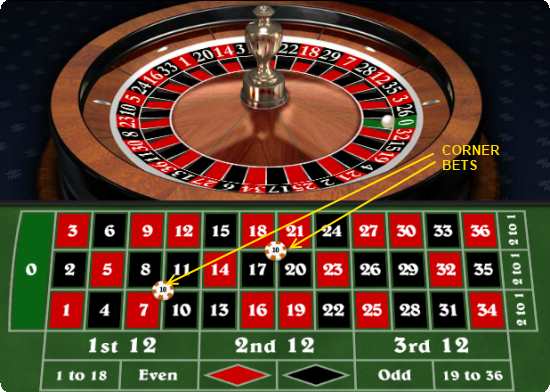
Roulette odds depend on the wheel and the bet. A European wheel has a single zero, while an American wheel has a single zero and a double zero. The extra pocket changes the probabilities and generally increases the house edge on standard bets. UK players should check which wheel is offered and read the game rules, rather than relying on the title alone.
A straight-up bet on one number has a low probability of winning but a high payout relative to the stake. Outside bets, such as red or black, cover more numbers and win more often, but they pay less. Neither choice removes the house edge. Previous spins do not make a particular number “due”; each spin is designed to be independent.
Blackjack and other table games
Blackjack odds can vary with the rules, including the number of decks, whether the dealer hits or stands on soft 17, and which doubling or splitting options are allowed. A published house edge normally assumes a particular set of rules and a specific playing strategy. It may not match the game you are viewing or the way you play.
For baccarat, craps and other table games, the same principle applies: identify the exact bet, payout and rules before wagering. A headline payout is only one part of the picture. The probability of winning and the conditions attached to that win matter too.
A quick odds and payout check
Before placing a wager, you can make a basic calculation. If a game lists a probability as a percentage, divide it by 100 to express it as a decimal. For a simplified independent event, the chance of it not happening is one minus that probability. If an event has a 2% chance on a single trial, the chance of missing it on one trial is 98%.
Repeated attempts can be misleading. The probability of at least one success across several independent trials can be estimated with this formula:
Chance of at least one success = 1 − (1 − p)n
Here, p is the probability of success on one trial and n is the number of trials. This is a mathematical illustration, not a strategy. It does not make a win more likely on the next spin or guarantee a result over a chosen number of attempts.
For a payout check, multiply the stake by the total-return multiplier if the game specifies one. If a £2 stake has decimal odds of 4.00, the total return on a win is £8, including the £2 stake. Always verify the game’s wording: a displayed figure might instead refer to profit, a multiplier on a particular bet, or a prize subject to bonus rules.
Checking odds and terms at Royal Fortune
When browsing Royal Fortune, open the individual game’s information panel before playing. Confirm its provider, rules, RTP where shown, bet limits and any bonus-round conditions. A casino lobby may summarise a game, but the in-game rules are usually the better place to check details that affect how payouts work. If an important figure is not available, contact support or choose a game whose rules are clear.
Payment and promotion terms also deserve attention. A bonus can have wagering requirements, eligible-game restrictions, a maximum bet limit or a withdrawal cap. These conditions do not change the game’s underlying odds, but they can affect whether promotional funds or winnings are withdrawable. Read the current terms before opting in, and do not deposit solely to qualify for an offer.
UK players should check that the operator is authorised to serve them and review the applicable terms, age requirements and responsible-gambling tools. Availability and licensing can change; verify the details directly rather than assuming a site is suitable because it appears in a search result.
If you are considering a Royal Fortune casino balance top-up, first confirm the payment method, minimum and maximum deposit, processing time and any fees shown in the cashier. Deposit only an amount already included in your entertainment budget. A top-up does not improve your odds, and chasing losses by adding more funds can increase harm.
Common mistakes when interpreting odds
- Confusing RTP with a personal guarantee. RTP is a long-run theoretical measure, not a session forecast or a promise of a particular return.
- Assuming a large payout is likely. Prize size and probability are different things. A large potential win may be associated with a very low chance.
- Believing in “hot” or “due” outcomes. Past independent results do not, by themselves, predict the next result.
- Ignoring game rules. The wheel type, table rules, bet size and bonus conditions can all affect how a figure should be interpreted.
- Using odds as a staking system. No calculation can remove the house edge or turn a casino game into a reliable source of income.
Frequently asked questions
Do higher RTP slots always pay more?
A higher RTP indicates a higher theoretical return over a very large number of plays under the stated model. It does not guarantee that one particular game will pay more during your session. Volatility and randomness can make short-term outcomes differ substantially.
Can I predict a slot’s next result from its previous spins?
No. If the game uses a properly functioning random number generator, a previous result does not reveal what the next one will be. A run of losses does not make a win due, and a recent win does not mean another is imminent.
Where should I look for a game’s rules?
Open the game’s information, help or paytable screen, usually available from an icon within the game. Read the complete rules for payouts, special features and eligible bets. If anything remains unclear, ask the casino’s support team before wagering.
Play with odds in perspective
Understanding odds helps you compare games and interpret their advertised payouts, but it cannot predict a win. Use RTP and house-edge figures as broad statistical information, read the specific game rules, and keep your spending within a fixed limit. Take breaks, avoid chasing losses, and stop if gambling is no longer enjoyable. UK players who need support can contact the National Gambling Helpline on 0808 8020 133 or visit GambleAware for information and help.
